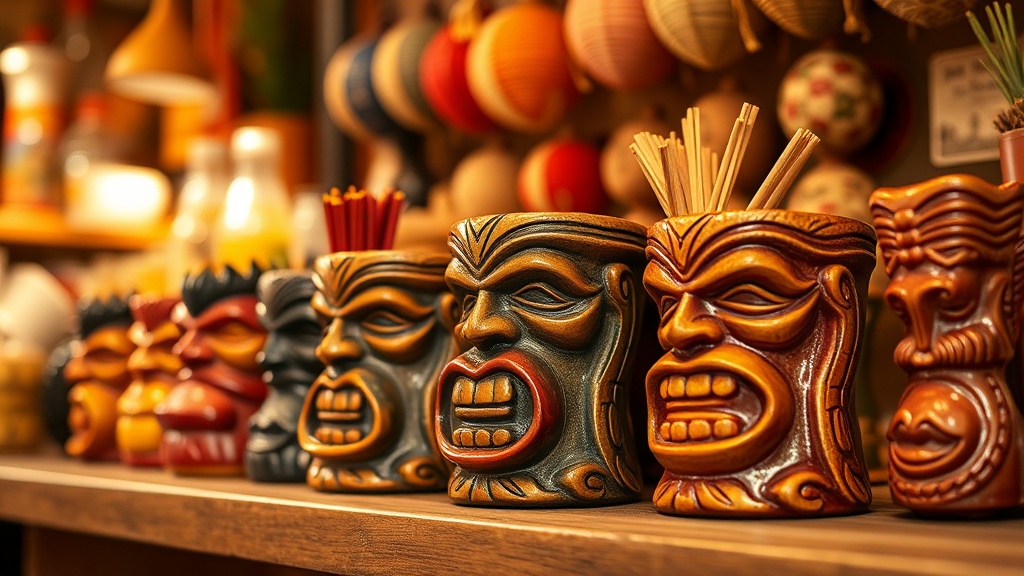
Finding High Quality Ceramic Tiki Mugs at Local Markets

You’re walking through a local weekend market, your eyes scanning a table of various trinkets, and you spot a heavy, hand-painted ceramic piece that looks like it could be a high-end piece from a boutique distillery. You pick it up, feeling the weight, but then you wonder if it’s just a cheap, mass-produced souvenir or a genuine collector's item. This guide explains how to identify high-quality ceramic tiki mugs at local markets, what to look for in terms of glaze and weight, and how to avoid common pitfalls like "shelf warmers" that lack character. Finding the right pieces in person is a skill that saves you from the disappointment of buying a dud online.
How Can You Tell if a Tiki Mug is High Quality?
High-quality ceramic tiki mugs are defined by their weight, the complexity of their glaze, and the precision of their sculptural details. If a mug feels light or hollow, it’s likely a thin-walled, low-fired piece meant for quick sale rather than long-term collecting. A premium mug—think of the heavy-duty pieces produced by Tiki culture icons or high-end modern makers—will have a substantial heft in your hand. You want something that feels significant, not like a piece of plastic-infused ceramic.
Check the bottom of the mug immediately. A quality piece often has a maker's mark or a distinct maker's stamp. Even if it isn't a famous brand like Ben Torندی or Tiki Cat, a well-made piece will have a smooth, finished base. If the bottom is rough, scratchy, or unfinished, the maker likely didn't prioritize quality control. It’s a red flag for the overall durability of the item.
Look closely at the glaze. Is it a simple, flat color, or does it have depth? High-end ceramics often use multi-layered glazes that create a sense of dimension. You might see subtle color shifts or a "crackle" effect that looks intentional rather than accidental. A cheap mug often has "runs" in the glaze where the paint has dripped unevenly, which can look messy rather than artistic.
The detail of the sculpt is another huge giveaway. If you're looking at a mug shaped like a deity or an animal, the facial features should be sharp. If the eyes are lopsided or the nose is a blob, it's a low-quality mold. Collectors value precision. A well-molded piece will have clean lines and a sense of character that makes it pop on a shelf.
The Weight Test
The weight of a mug tells a story. A heavy mug suggests a thick ceramic wall, which is better for temperature retention—a big deal if you're actually drinking from it. If you can't find a scale, use your other hand to compare it to a known object. A standard ceramic mug should feel much heavier than a standard coffee mug of the same size.
What Are the Signs of a Cheap Souvenir Mug?
Cheap souvenir mugs usually feature repetitive patterns, thin walls, and very little sculptural depth. These are the pieces that often end up in the "clearance" section of big-box retailers or at the bottom of a bargain bin at a flea market. They lack the "soul" that true collectors look for.
One major sign is the use of decals instead of hand-painted details. If you see a repetitive, printed-on image that looks like it could be a sticker, stay away. Real collector-grade mugs often feature hand-painted elements or high-quality hand-applied glazes that give the piece a unique, one-of-a-kind feel. If the "character" on the mug looks like a cartoonish, low-resolution print, it's a sign of a mass-produced item.
Another thing to watch for is the "feel" of the texture. High-quality ceramics have a tactile quality—maybe it's a rough, volcanic texture or a silky, glass-like finish. Cheap mugs often feel "waxy" or unnaturally smooth, almost like they're made of resin or plastic. This is a common way to save money on production, but it ruins the experience of holding a real ceramic piece.
Don't forget to check for "seam lines." In cheap manufacturing, you can often see the lines where two halves of a mold were joined together. A high-quality mug will have these seams sanded down or hidden within the sculptural design. If you see a visible line running down the side of a tiki head, it's a low-tier piece.
| Feature | High-Quality Ceramic | Low-Quality Souvenir |
|---|---|---|
| Weight | Heavy, substantial, dense | Light, hollow, thin-walled |
| Glaze | Deep, multi-layered, textured | Flat, single-color, "waxy" |
| Detailing | Sharp, sculptural, hand-finished | Soft, blurry, or decal-based |
| Base | Smooth or stamped maker's mark | Rough, uneven, or unbranded |
How Much Should You Pay for a Quality Tiki Mug at a Market?
The price for a quality ceramic tiki mug at a local market typically ranges from $25 to $75, depending on the maker and the complexity of the design. You shouldn't expect to find a museum-grade piece for $5, but you also shouldn't be pressured into paying $200 for a generic design that has no brand recognition. Price is often a reflection of the labor involved in the ceramic process.
If you see a mug that looks incredibly intricate but is being sold for $10, be suspicious. It might be a resin cast rather than actual ceramic. Resin is a common way to mimic the look of ceramic without the actual firing process, and while it can look good, it doesn't hold the same value in the collecting community. It also lacks the thermal properties of real ceramic. If you're unsure, ask the vendor if the piece is "true ceramic" or "resin/polyresin."
On the flip side, if you find a piece from a well-known maker, the price will naturally be higher. Don't be afraid to negotiate a little, but recognize that high-quality craftsmanship carries a premium. A well-made piece will hold its value much better than a cheap souvenir. If you're looking to build a serious collection, it's better to buy one great piece than five mediocre ones. If you're just starting out, you might want to read about common mistakes that ruin ceramic mugs to ensure you're treating your new finds correctly.
It's also worth noting that many local markets have different "tiers" of vendors. Some are strictly selling cheap, mass-produced trinkets, while others specialize in handmade or vintage goods. If you're at a craft fair, you're more likely to find hand-thrown or hand-painted ceramics. If you're at a large-scale flea market, you're more likely to find vintage pieces that require a keen eye to identify.
Identifying the "Real Deal"
- The Light Test: Hold the mug up to a light source. If you see light shining through the walls, it's a very thin, low-quality ceramic.
- The Sound Test: Tap the mug gently with your fingernail. A high-quality ceramic piece should have a clear, sharp "clink" rather than a dull "thud."
- The Texture Check: Run your fingers over the crevices. High-quality pieces will have deep, intentional textures, not just surface-level scratches.
When you find a piece that truly catches your eye, take a moment to appreciate the artistry. A great mug isn't just a vessel for a drink; it's a piece of art. Whether it's a heavy, dark-glazed Moai or a brightly colored tropical bird, the quality of the ceramic is what will make it a centerpiece in your collection. If you've already found some gems, make sure you're displaying them properly by checking out my guide on choosing the right lighting for your display.
Finding these pieces in person is a thrill. You get to feel the weight, see the true color of the glaze, and ensure there aren't any hidden cracks or chips that a photo might miss. It's a much more tactile way to collect, and it's how many of the best collections are built—one market find at a time.