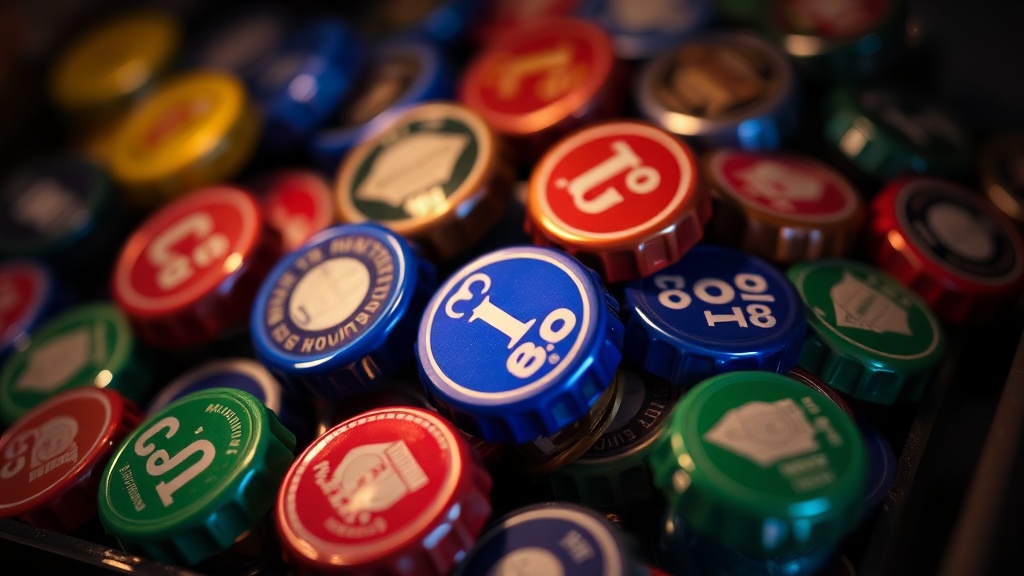
What's the Best Way to Store Bottle Caps Without Damaging Their Finish?

You've spent three hours at a flea market in rural Virginia, sifting through shoeboxes of rusted junk to find twelve pristine caps from the 1960s. The colors are vibrant, the edges are sharp, and you can already picture them arranged in your display case. But here's the catch — most collectors destroy their best finds within six months of bringing them home. Not through malice or neglect, but through storage choices that seem logical on the surface yet slowly degrade the metal, the paint, and the value of the piece.
I've watched collectors lose hundreds of dollars in rarity value because they stored rare bottle caps in plastic tubes, stacked them loose in drawers, or displayed them under glass domes without understanding humidity. The damage isn't immediate. It creeps in — a tiny rust bloom here, a paint chip there, a cardboard backing that off-gasses chemicals and dulls the finish over two years. This post covers what actually works for long-term storage, why common methods fail, and how to set up a system that protects your investment without making the collection inaccessible.
Why Do Plastic Containers Ruin Vintage Metal Caps?
Walk into any collector's home and you'll probably find bottle caps sorted into plastic craft organizers, pill bottles, or those compartmentalized hardware cases from the hardware store. They're cheap, they're visible, and they seem perfect. They're not.
Most plastics — especially PVC and certain acrylics — contain plasticizers that break down over time. These chemicals leach into the air inside the container and react with the metal of your caps. You won't see it happening. What you notice is the gradual dulling of glossy finishes, the appearance of a faint film on metal surfaces, or in worst cases, actual pitting of the underlying steel. The problem accelerates in warm environments, which is exactly where most people store their collections: attics, garages, or upstairs rooms that heat up in summer.
Polyethylene and polypropylene containers are safer than PVC, but they're not ideal either. They can trap moisture if caps aren't completely dry when stored, creating micro-environments where corrosion thrives. If you've opened a container and caught that faint metallic smell — that's oxidation happening right in front of you. Your caps are already degrading.
The alternative isn't expensive. Glass jars with metal lids (lined with acid-free paper), archival-quality polyethylene bags designed for coin collecting, or even paper envelopes stored in acid-free boxes work better than any plastic organizer. Yes, you lose some visibility. But you gain preservation. Most serious collectors use a hybrid system: immediate display pieces in safer conditions, long-term storage in archival materials, and plastic only for transport — never for permanent housing.
How Does Humidity Actually Affect Bottle Cap Collections?
Here in Richmond, summer humidity hits eighty percent without trying. Collectors in Arizona or Colorado might laugh at this concern — their caps stay dry as bones. But humidity isn't just about rust, and dry climates create their own problems.
Metal bottle caps are composite objects. You've got steel or aluminum as the base, a coating (paint, enamel, or printed paper), and often a cork or plastic liner inside. Each material responds to moisture differently. The metal expands and contracts. The paint becomes brittle or softens. Paper labels warp, delaminate, or grow mold. Cork liners — common on pre-1970s caps — are especially vulnerable; they absorb moisture, swell, and can actually crack the metal crimp that holds them in place.
The target range is fifty to fifty-five percent relative humidity. Below forty percent, you risk static buildup (which attracts dust and can damage paper labels) and the drying out of cork and adhesive materials. Above sixty percent, you're in corrosion territory. The challenge is that most homes fluctuate between thirty and seventy percent depending on the season, and basements — popular storage spots for collections — often sit at eighty percent year-round.
Small dehumidifiers work for dedicated storage rooms. Silica gel packets help for enclosed containers, but they need regeneration (drying out) every few months — most people forget this step. The real solution is environmental control: a room with HVAC, not a basement or attic, and humidity monitoring with inexpensive digital hygrometers. Check monthly. Adjust seasonally. It's boring work, but so is watching rust spots appear on a cap you've been hunting for three years.
Should You Clean Bottle Caps Before Storing Them?
This question sparks arguments at every collector meetup. The preservationist says never clean anything — original condition matters more than appearance. The practical collector points out that dirt contains acids, sugars, and biological material that actively destroy surfaces. Both are right, and both are dangerously wrong if applied universally.
Unopened bottle caps with original contents — yes, this is a collecting category — should never be cleaned externally and certainly never opened. The value lies in the sealed state. But most collectible caps have been removed from bottles, often by whoever drank the contents decades ago. These caps arrive with residue: sticky soda syrup, beer proteins, cigarette smoke film from bar storage, or simply the accumulated grime of fifty years in a drawer.
For metal caps with painted or printed designs, dry cleaning is safest. A soft brush removes loose dirt. A cotton swab with distilled water handles light soil. Never use tap water — minerals deposit and create new problems. For stubborn residue, a cotton swab with a tiny amount of mild dish soap followed by immediate rinsing with distilled water, then immediate drying, works. Immediate is the key word. Water left sitting starts corrosion within hours.
Cork-lined caps present the biggest challenge. The cork can harbor mold spores that spread to paper labels and even metal surfaces. Light cleaning with a barely-damp swab — distilled water only — followed by thorough air drying in low humidity, is the maximum intervention most experts recommend. Organizations like the Institute of Conservation provide guidelines for treating composite objects that apply directly to this situation. When in doubt, consult a professional conservator rather than risk a rare piece. The cost of consultation is trivial compared to the cost of damage.
What's the Safest Way to Display Bottle Caps Long-Term?
Storage protects, but display is why we collect. A collection in archival boxes in a closet might be safe, but it's not doing its job — which is to be seen, arranged, and appreciated. The trick is finding display methods that don't sacrifice preservation for visibility.
Direct sunlight is the enemy, and not just for paper labels. Paint fades. Plastics yellow and become brittle. Even metals can show color shifts after years of UV exposure. North-facing windows (in the northern hemisphere) provide safe natural light. South-facing windows require UV-filtering film or simply keeping displays set back from the direct beam. LED lighting — cool, low-UV, low-heat — has revolutionized collection display. Avoid halogen track lighting; it generates heat and UV, the dual destroyers.
Display cases need to breathe while keeping dust out. Sealed glass cases with tight rubber gaskets — the kind used for taxidermy or museum objects — can trap humidity and create worse problems than open shelving. Better are cases with slight ventilation, or cases that you open regularly to let air circulate. Dust isn't harmless; it's abrasive and can contain acidic compounds. But stagnant humid air is worse.
Mounting presents its own challenges. Adhesive backings fail over time and leave residue. Magnetic strips can work for steel caps but may magnetize them slightly (not a problem for most, but purists object). Individual stands or angled slots in foam board are safest. The Library of Congress preservation guidelines for small objects offer useful parallels for anyone building custom display solutions.
How Do You Handle Caps with Cork Liners vs. Modern Plastic?
The dividing line in bottle cap collecting falls somewhere in the 1960s and early 1970s, when manufacturers switched from natural cork liners to synthetic materials. Cork is organic, acidic, and unstable. Plastic is inert but can become sticky or brittle. Each requires completely different storage thinking.
Cork-lined caps should never be stored cork-to-cork. The acid in the cork can transfer, creating brown spots on adjacent metal surfaces. They need air circulation more than plastic-lined caps because cork can grow mold in stagnant humidity. They benefit from being stored slightly face-down, so any cork debris falls away from the printed design rather than onto it. And they're more vulnerable to crushing — that cork provides structural support, and once it crumbles, the cap loses its shape.
Plastic-lined caps are easier. The main issues are plasticizer migration (if stored with other plastics) and the tendency of some vintage plastics to become sticky with age. If you open a storage container and caps are adhering to each other or the lining feels tacky, that's plastic breakdown. Separate them immediately, clean with a mild solvent appropriate for the cap's exterior material, and re-store in inert materials.
Mixed storage — cork and plastic together — is common because collectors organize by brand or era rather than construction. This works fine with proper spacing and archival materials between pieces. Just don't stack them directly on each other, and check cork-lined pieces more frequently for signs of deterioration. The Conservation OnLine resources from Stanford provide excellent technical detail on organic material preservation that applies to cork.
Your collection represents time, money, and the irreplaceable luck of being in the right place when something rare surfaced. Storage isn't exciting. It doesn't photograph well for Instagram, and it won't spark conversation at parties. But five years from now, when another collector pulls out their once-pristine caps to find spots, stains, and corrosion, yours will still look like they did the day you found them. That's the difference between collecting and merely accumulating — the long view, the patience to do the boring thing right, and the willingness to protect your investment before it needs rescuing.