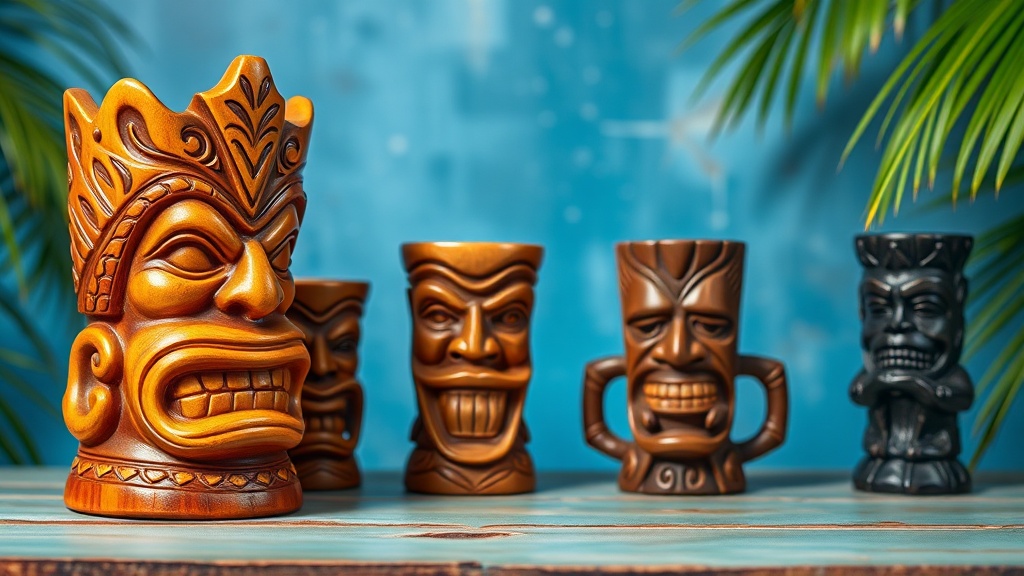
The Ultimate Tiki Mug Collecting Guide for Beginners & Enthusiasts

This guide covers everything needed to start and grow a tiki mug collection—from identifying authentic pieces and understanding maker marks to spotting reproductions and building displays that protect the investment. Whether someone's drawn to mid-century Hawaiian nostalgia or modern artist collaborations, there's a method to collecting that separates casual buyers from serious enthusiasts.
What Exactly Is a Tiki Mug and Why Do People Collect Them?
Tiki mugs are ceramic drinking vessels shaped like Polynesian-inspired figures, tropical deities, or island-themed objects. They emerged in the 1930s alongside tiki bars—those dimly lit, thatched-roof establishments serving rum-heavy cocktails in extravagant vessels. The Tiki Central community traces the form's evolution from Don the Beachcomber's early Los Angeles outposts through the 1950s tiki boom when every suburb seemed to sprout its own pseudo-Polynesian escape.
Collectors gravitate toward these pieces for different reasons. Some chase the mid-century modern aesthetic—the atomic-age optimism baked into every glossy glaze. Others appreciate the craftsmanship; hand-thrown mugs from small-batch potters represent genuine folk art. Then there's the social element. Tiki mugs anchor home bar setups, conversation starters that break ice faster than the drinks they hold.
Here's the thing: tiki mugs occupy a unique collecting niche. Unlike stamps or coins with rigid grading systems, tiki valuation incorporates artistry, provenance, and—let's be honest—pure vibes. A chipped mug from a legendary defunct bar sometimes commands more than pristine retail pieces. The market respects history over perfection.
How Much Should Beginners Expect to Spend on Tiki Mugs?
Entry-level tiki mugs typically run $25 to $75, while rare vintage pieces and limited artist collaborations can fetch $500 to $2,000 or more at auction. The spread is wide, which makes tiki collecting accessible without being cheap.
| Category | Price Range | Examples |
|---|---|---|
| Mass-market retail | $15 – $40 | TIKI Brand basics, Spencer's novelties, Target seasonal lines |
| Mid-tier contemporary | $40 – $120 | Tiki Farm standard releases, MunkTiki regular editions, Horror in Clay limited runs |
| Premium artist collaborations | $120 – $400 | Shag x Tiki Farm releases, Doug Horne limited editions, Kevin Kidney originals |
| Vintage 1950s-60s | $150 – $800+ | Orchids of Hawaii marked pieces, Daga warehouse finds, Tiki Bob's memorabilia |
| Ultra-rare/event exclusives | $500 – $3,000+ | Tiki Oasis one-offs, Mug-Crawl prototypes, deceased artist estate pieces |
That said, price doesn't always correlate with enjoyment. Some collectors build impressive displays entirely from thrift store finds and estate sale scores. The hunt matters as much as the acquisition.
Where Can You Find Authentic Tiki Mugs (and Avoid Fakes)?
Authentic tiki mugs surface through established dealers, tiki events, specialized online marketplaces, and—if luck holds—flea markets and estate sales. The Ooga-Mooga database maintains the most comprehensive catalog of documented pieces with maker attributions, which serves as an invaluable reference when authentication questions arise.
For contemporary releases, buying directly from makers eliminates doubt. Tiki Farm—perhaps the most prolific modern manufacturer—sells through their website and authorized retailers. MunkTiki (operated by ceramicist Derek Yaniger) releases numbered editions that include certificates. Horror in Clay produces Lovecraftian-tiki crossovers with detailed provenance documentation.
The catch? Reproductions and "tiki-style" mugs flood the market. Big-box retailers regularly appropriate the aesthetic without the heritage. There's nothing wrong with buying a $12 ceramic head from HomeGoods—just don't pay vintage prices for it. Check the base for maker's marks. Authentic vintage pieces often carry country-of-origin stamps ("Japan," "Hawaii," or "USA") or importer labels like Orchids of Hawaii, Daga, or Tiki Bob's.
Worth noting: the tiki community polices itself. Sellers who misrepresent reproductions as vintage face swift reputation damage. Join collector forums before making big purchases. The crowd spots red flags quickly.
Warning Signs of Problematic Listings
- Vague descriptions like "old tiki mug" without era specificity
- Perfect condition claimed on supposedly 60-year-old pieces (aging happens)
- Resin or plastic labeled as ceramic vintage
- Seller unwilling to photograph the base or maker's mark
- Prices dramatically below market (that $20 "rare" Orchids of Hawaii piece is probably a reproduction)
How Should You Display and Care for a Tiki Mug Collection?
Proper display protects ceramic integrity while showcasing the collection's visual impact. Tiki mugs crave indirect light—direct sun fades glazes and degrades some older finishes. Floating shelves with lips prevent tipsy accidents during enthusiastic cocktail preparation. Climate matters too; extreme humidity promotes crazing (those fine surface cracks) in older pieces.
Cleaning requires restraint. Dishwashers destroy hand-painted details and gold accents. Even microwave use risks thermal shock. Hand wash with mild soap, dry immediately, and never soak vintage pieces—porous older ceramics can absorb moisture and develop internal damage.
Here's a practical approach: rotate the display. Most collectors own more mugs than shelf space allows. Store extras in acid-free tissue within plastic bins (label everything). Swap pieces seasonally or when the mood strikes. This practice keeps the collection fresh and reduces wear on individual items.
For serious collections, documentation matters. Photograph each piece with maker marks visible. Record purchase dates, prices, and provenance. Insurance riders for high-value collections exist—speak with a specialty insurer about collectibles coverage, as standard homeowner's policies often exclude or limit ceramic collections.
What Are the Most Collectible Tiki Mug Brands and Artists?
Certain names dominate serious tiki collecting circles. Understanding these makers helps target acquisitions strategically.
Vintage Foundations:
Orchids of Hawaii imported thousands of ceramic tiki mugs from Japan between the 1950s and 1970s. Their stickers—often bearing the words "Orchids of Hawaii" with a floral motif—identify legitimate pieces. These range from common ($30-50) to scarce forms like the double-headed mugs ($300+).
Daga operated as another major importer, bringing Japanese ceramics to American tiki bars. Their warehousefinds still surface occasionally, though prices have climbed as supply dwindles.
Tiki Bob's—the San Francisco bar that operated from 1947 to 1987—produced iconic "Tiki Bob" face mugs. Originals carry premium prices; reproductions exist but lack the weight and glaze quality of vintage pieces.
Contemporary Makers:
Tiki Farm deserves special mention. Founded by Holden Westland, this California-based operation has produced thousands of designs since 2001. Their collaborations with artists like Shag (Josh Agle), Doug Horne, and Kevin Kidney improved tiki mugs from barware to gallery-worthy art. Tiki Farm pieces often appreciate—limited runs of 200-300 units routinely sell on secondary markets for 3-5x retail.
MunkTiki represents the punk-rock wing of tiki—rougher textures, more aggressive sculpting, deliberate imperfection. Derek Yaniger's work appeals to collectors who find mainstream tiki too polished.
VanTiki (Vanessa Wenzel) and Tiki Diablo produce smaller-batch pieces with waiting lists. Their mugs rarely depreciate.
Can Tiki Mugs Be a Serious Investment?
Some tiki mugs appreciate significantly, though collecting primarily for profit misses the point. The market runs on passion, not Wall Street logic. That said, documented trends show certain categories outperforming.
Limited edition contemporary pieces from recognized artists—particularly those with edition sizes under 300—historically maintain or increase value. The Tiki Oasis festival releases (annual event-exclusive mugs) represent a tracked submarket with dedicated followers. Early Tiki Farm Shag collaborations, originally priced at $60-80, now command $400-800 depending on condition and rarity.
Vintage pieces present trickier investment prospects. Condition sensitivity matters enormously—a hairline crack can reduce value 60-70%. Provenance documentation (old bar photos, estate sale records) adds legitimacy and price support.
Here's the thing: liquidity isn't guaranteed. Unlike coins or stamps with established dealer networks, selling tiki mugs requires finding the right buyer. Facebook groups, Instagram auctions, and dedicated forums handle most secondary transactions. Plan to hold pieces 3-5 years minimum for meaningful appreciation.
The smartest financial approach? Buy what you'd want to display regardless of value. If appreciation happens, that's a bonus. If not, the collection still sparks daily joy—which, ultimately, is the best return any collectible can offer.
"Collect the story, not just the object. A $30 mug from your first tiki bar visit carries more weight than a $300 impulse purchase you can't remember buying."
Ready to start hunting? Grab a reference guide, join the community, and remember—the best collection is the one that makes the collector smile.