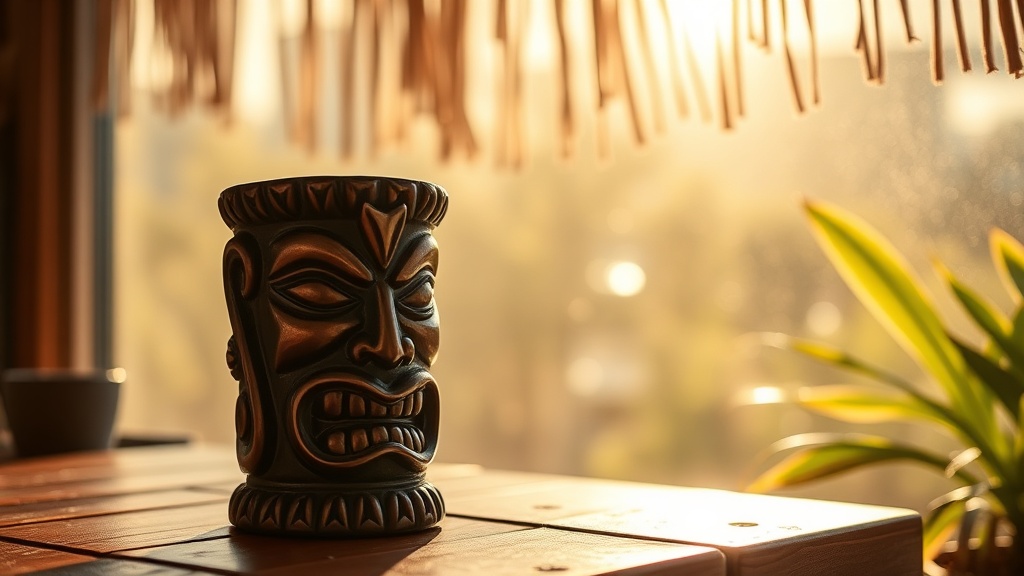
The Sunlight Secret: Why Your Tiki Mugs Belong Away from Windows

Quick Tip
Position your tiki mugs at least 3 feet away from windows or use UV-filtering glass to prevent glaze fading and cracking.
Tiki mugs face a silent enemy that fades colors, weakens glazes, and destroys value. This guide explains how ultraviolet light damages ceramic collectibles, which tiki mug materials are most vulnerable, and exactly where to display a collection for maximum protection. Whether preserving a vintage Orchids of Hawaii mug or a limited edition Munktiki release, the right placement matters.
Why does sunlight damage tiki mugs?
UV radiation breaks down chemical bonds in ceramic glazes. It's that simple. When photons hit the surface, they trigger photochemical reactions that alter pigments permanently. Bright reds turn to muddy browns. Vibrant blues fade to washed-out grays. The damage is cumulative and irreversible.
High-fired stoneware resists better than low-fire earthenware. (Think of the difference between a heavy-duty Bauer mug and a thin-walled tourist piece.) But no glaze is completely immune. Even museum-quality ceramics suffer under prolonged exposure. The catch? Damage happens slowly—so slowly that most collectors don't notice until it's too late.
Which tiki mug materials fade the fastest?
Low-fire earthenware with organic-based pigments fades within months. High-fire stoneware with mineral glazes can last years—but eventually succumbs. Here's how the most common tiki mug materials stack up:
| Material | UV Resistance | Fade Timeline | Notable Examples |
|---|---|---|---|
| Low-fire earthenware | Poor | 3-6 months | Vintage Orchids of Hawaii, 1950s-60s souvenirs |
| High-fire stoneware | Good | 2-5 years | Munktiki, Tiki Farm classics, Lost Temple |
| Porcelain | Moderate | 1-3 years | Japanese imports, fine art editions |
| Glow-in-the-dark glazes | Very Poor | Weeks | Modern limited editions with phosphorescent accents |
Worth noting: Even "UV-resistant" display cases with glass or acrylic filters aren't perfect. They reduce damage significantly—but over decades, some fading still occurs. The only true protection is blocking light entirely.
Where should you display tiki mugs to prevent sun damage?
Interior rooms with no windows work best. Basements, interior hallways, and dedicated display closets offer complete protection. That said, most collectors want to enjoy their mugs—not hide them.
If a windowed room is unavoidable, position shelves on walls opposite or perpendicular to the light source. North-facing windows (in the Northern Hemisphere) receive the least direct UV. South-facing windows are the worst offenders. East and west exposures hit hard during morning and afternoon.
Practical solutions exist for every setup:
- UV-filtering film on windows blocks 99% of harmful rays—apply it once, protect forever
- Display cabinets with solid backs placed against exterior walls create a light barrier
- LED strip lighting inside cases showcases mugs without the UV penalty of natural light
- Rotating displays keep favorite pieces in darkness while others take the spotlight
The difference between a mug displayed near a sunny window and one kept in dim conditions becomes stark after just a few years. A vibrant 1960s Orchids of Hawaii volcano mug—reds blazing, glaze pristine—can turn into a washed-out relic. Collectors who learn the sunlight secret early preserve both beauty and resale value.
"Light damage is the most common—and most preventable—cause of tiki mug deterioration in home collections." — American Institute for Conservation