The Fascinating History of Vintage Tiki Mugs: From Polynesian Pop to Collectible Art

This post traces the evolution of vintage tiki mugs from their mid-century origins in Polynesian-themed restaurants to their current status as sought-after collectibles. You'll discover what makes certain mugs valuable, how to spot authentic pieces versus modern reproductions, and which brands and artists command the highest prices in today's market. Whether you're building a collection or just inherited a dusty mug from your grandparents, here's everything worth knowing.
When Did Tiki Mugs First Become Popular?
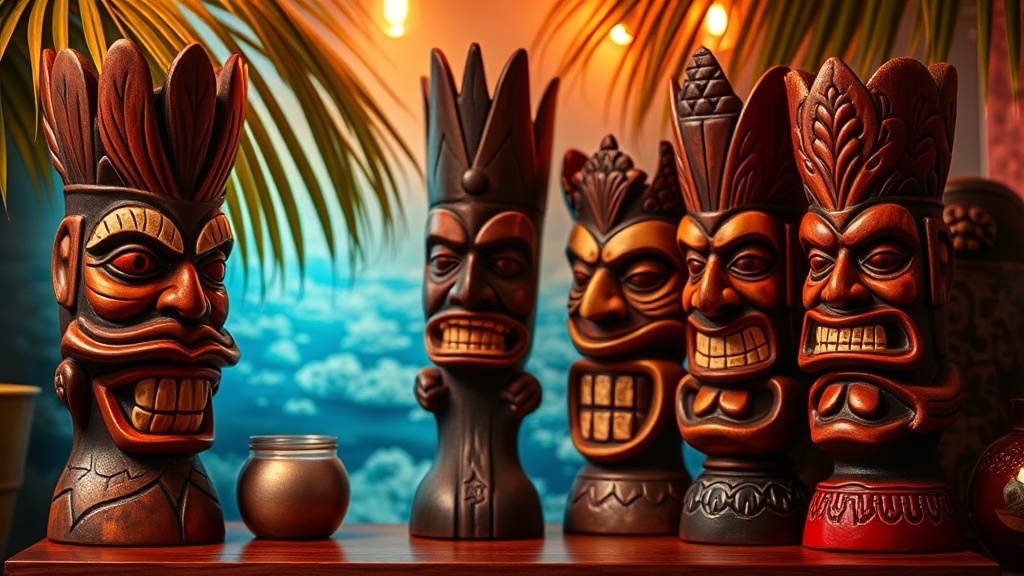
Tiki mugs emerged alongside the tiki bar craze of the 1930s through 1960s. Don the Beachcomber in Hollywood and Trader Vic's in Oakland pioneered the Polynesian-themed restaurant concept, serving rum-based cocktails in ceramic vessels shaped like shrunken heads, moai statues, and Hawaiian gods. These weren't just cups — they were souvenirs designed to transport mainland Americans to an imagined tropical paradise.
The post-World War II boom accelerated everything. Returning servicemen brought home stories from the South Pacific, and Hawaii's 1959 statehood fed the obsession. By the early 1960s, tiki bars dotted the American space from coast to coast. Each venue commissioned custom mugs bearing their logo or mascot. The Thousand Oaks Bowl in California had its signature coconut-shaped cup. The Sip 'n Surf chain distributed mugs shaped like hula dancers. These pieces weren't sold — they were given away as promotional items or offered for purchase as keepsakes.
The golden age didn't last. By the late 1970s, tiki culture had faded into kitsch. Bars closed. Mugs got boxed up, donated, or trashed. That scarcity — combined with genuinely distinctive ceramic artistry — set the stage for the collector's market that would emerge decades later.
What Makes a Tiki Mug Valuable to Collectors?
Several factors determine value: age, rarity, condition, manufacturer, and artistic merit. Original vintage pieces from the 1950s–1970s typically outrank modern reproductions, though contemporary artist editions have carved out their own premium niche.
Here's the thing about condition — chips, cracks, and fading kill value. A mint-condition Orchids of Hawaii R-1 mug might fetch $200–$300. The same piece with a hairline crack? Maybe $40. Crazy, but that's the market.
| Manufacturer/Type | Era | Typical Price Range | Rarity |
|---|---|---|---|
| Orchids of Hawaii (standard line) | 1960s–1970s | $30–$150 | Common |
| Orchids of Hawaii (custom restaurant) | 1960s–1970s | $100–$500 | Moderate |
| Daga (Hong Kong) | 1960s | $50–$200 | Moderate |
| Otagiri Mercantile Company | 1970s–1980s | $40–$180 | Common |
| Trader Vic's original issues | 1950s–1960s | $150–$800+ | Rare |
| Tiki Farm limited editions | 2000s–present | $40–$300 | Varies |
| Artist editions (Munktiki, Tiki Tony) | 2000s–present | $75–$500+ | Limited |
Worth noting: marks and stamps matter enormously. Flip any suspect mug and check the base. Authentic vintage pieces often carry embossed manufacturer stamps — "Orchids of Hawaii, Japan" or "Daga, Hong Kong". Modern reproductions might say nothing or carry telltale "Made in China" stamps that didn't exist during the golden age.
Which Tiki Mug Manufacturers Should Collectors Know?
Understanding the major manufacturers helps separate treasure from trash. The terrain splits roughly into three eras: vintage production (1930s–1980s), the dark ages (1980s–1990s), and the revival (2000s–present).
Orchids of Hawaii dominated the vintage market. This Japanese import company supplied mugs to hundreds of American tiki bars and restaurants. Their standard line — featuring moai, hula girls, and drum-shaped vessels — turns up constantly at estate sales and thrift shops. Custom pieces made for specific venues (the Kona Kai in Philadelphia, for example) command premiums precisely because they weren't mass-produced.
Otagiri Mercantile Company (OMC) represents another key player, though they peaked later (1970s–1980s). OMC mugs often feature superior glaze work and heftier construction. Their Trader Vic's licensed pieces remain particularly collectible — the Scorpion Bowl and Fog Cutter mugs appear regularly on eBay with healthy bidding wars.
The catch? Not everything old is valuable. Daga mugs from Hong Kong — common throughout the 1960s — remain relatively affordable because so many survived. They're charming, well-made, and absolutely worth owning. Just don't pay tiki mug premium prices for them.
The Modern Revival: Artist-Driven Collectibles
Today's market bears little resemblance to the restaurant-supply model. Tiki Farm, founded in 2001, pioneered limited-edition artist collaborations. They commission renowned ceramicists like Derek Yaniger and Kevin Kidney to design runs of 200–500 pieces. These sell out within hours and immediately hit secondary markets at 2–5x retail.
Munktiki (the studio of artist Derek Yaniger) produces some of the most sought-after contemporary pieces. His Shrunken Head mug — first released in 2003 — now commands $400–$600 when signed and numbered. Tiki Tony (Tony Murphy) specializes in whimsical, character-driven designs often licensed by Disney and Lucasfilm. Yes, there's an official Star Wars tiki mug line, and yes, the Boba Fett vessel sells for stupid money.
That said, the revival isn't all about investment. Plenty of modern manufacturers — Horror In Clay, Tiki Diablo, Eekum Bookem — produce affordable, beautiful work in the $40–$80 range. These won't fund your retirement, but they'll make excellent drinks and spark conversations.
How Can You Tell Real Vintage from Reproduction?
Authentication challenges every collector. The market floods with "vintage-style" mugs made last year in China, often sold disingenuously by sellers who know exactly what they're doing. Here's how to protect yourself.
Start with weight and feel. Genuine vintage ceramics from Japan and Hawaii used dense, high-quality clay. They feel substantial in hand — not flimsy or hollow. Glazes on authentic pieces show variation, sometimes slight drips or unevenness that indicates hand-finishing. Modern mass-production achieves suspicious uniformity.
Check the base meticulously. Vintage Japanese imports typically carry country-of-origin marks: "Japan" for pre-1950s pieces, "Made in Japan" for 1950s–1980s. "Made in China" stamps didn't appear on tiki mugs until the 1990s — seeing that on a supposedly "vintage 1960s" piece is a dead giveaway. Hong Kong production (Daga) typically shows "Hong Kong" or "British Crown Colony" stamps.
Study the glaze colors. Vintage mugs favored earthy tones — avocado green, harvest gold, burnt orange, chocolate brown. These reflected mid-century interior design trends. Modern reproductions often use brighter, more saturated colors because that's what contemporary buyers prefer. It's subtle, but your eye learns to spot it.
The provenance question matters too. Ask sellers specific questions: Where did this come from? Can you document its history? Vague answers — "from an estate sale" or "found at auction" — warrant suspicion. Legitimate vintage pieces often come with stories, sometimes with original receipts or restaurant memorabilia.
Where Do Collectors Find Vintage Tiki Mugs Today?
Hunting grounds have shifted dramatically over the past decade. The thrift store glory days — when pristine Orchids of Hawaii mugs sat forgotten on shelves for $2 — are mostly gone. Too many people watch Tiki style features and follow reseller Instagram accounts.
Estate sales remain productive, particularly in regions where tiki culture thrived. California, Florida, and Hawaii obviously produce the best finds. But don't ignore the Rust Belt — Cleveland, Detroit, and Pittsburgh had strong tiki bar scenes that left behind forgotten collections in basements and attics.
Online marketplaces require caution. eBay's tiki mug category overflows with overpriced junk and misidentified reproductions. Facebook collector groups offer better odds — communities like "Tiki Mugs & More" and "Vintage Tiki Collectors" enforce self-policing cultures where members call out questionable sales. The best deals happen through private messaging, not public auctions.
Tiki conventions represent the high-end hunting ground. Tiki Oasis in San Diego — the largest such gathering — hosts vendor rooms where serious collectors sell, trade, and display museum-quality pieces. Entry-level buyers might find the prices intimidating, but the education is free. Handle enough authentic vintage mugs in person and you'll develop the tactile knowledge that prevents expensive mistakes later.
Here's the thing: building a meaningful collection takes patience. The collectors who assemble impressive displays over decades aren't the ones buying every shiny object on eBay. They're the ones who study, who wait, who recognize that a beat-up Mauna Loa Supper Club mug with character beats a shelf full of pristine but soulless reproductions.
Your collection should reflect your taste, not market trends. Some collectors specialize in Trader Vic's memorabilia. Others chase specific artists or geographic regions. There's no wrong approach — except buying things you don't love because someone told you they'll appreciate in value. The tiki mug market fluctuates. Your enjoyment shouldn't.