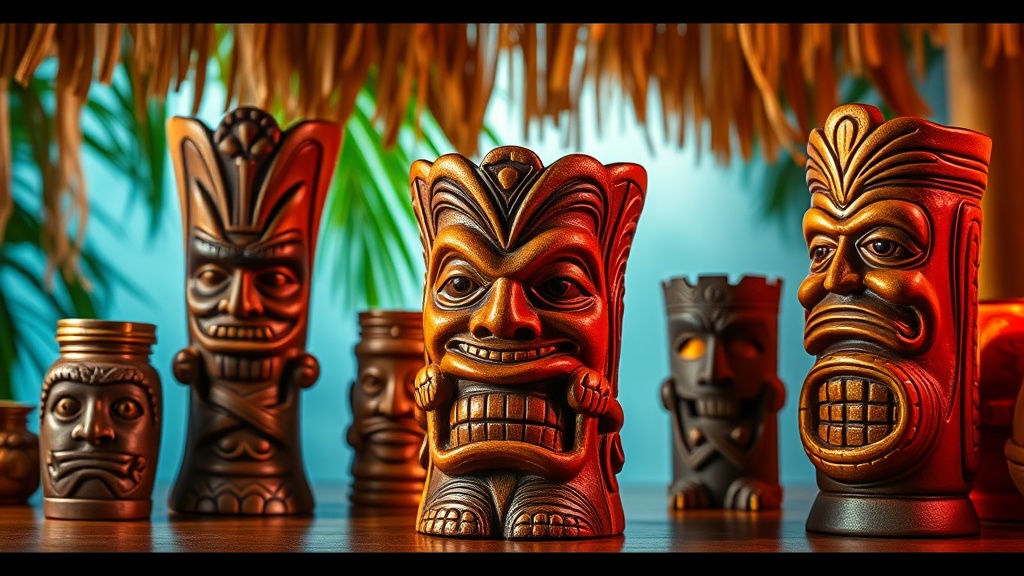
The Fascinating History of Tiki Mugs: From Don the Beachcomber to Modern Collectibles

This post traces the complete evolution of tiki mugs from their 1930s Polynesian-themed restaurant origins through today's vibrant collector's market. Whether you're hunting for vintage Don the Beachcomber originals at estate sales, comparing modern releases from Tiki Farm and Munktiki, or simply curious why people pay hundreds for a ceramic cocktail vessel, this guide covers the makers, materials, and market forces that shaped one of the most distinctive collecting categories in the Bottles, Caps & Smalls world.
Where Did Tiki Mugs Actually Come From?
The tiki mug was born in 1934 at Don's Beachcomber Cafe in Hollywood. Ernest Raymond Beaumont-Gantt (who later legally changed his name to Donn Beach) didn't invent ceramic drinkware, but he was the first to pair exaggerated Polynesian-themed vessels with rum-heavy tropical cocktails in a commercial setting. The original mugs were simple brown ceramic cylinders with carved faces — nothing like the lurid colors collectors chase today.
Here's the thing: Beach didn't manufacture these himself. Early Don the Beachcomber mugs came from California pottery companies like Vernon Kilns and later, Tiki's own in-house ceramics operation. The designs evolved from plain brown " cannibal" faces to the more familiar hula girl and Moai motifs by the late 1940s. A genuine 1940s Don the Beachcomber mug in good condition now commands $200–$400 at auction — more if it still has the original location stamp on the base.
Victor Bergeron (Trader Vic) followed quickly. His Oakland restaurant opened in 1936, and by the 1940s, Trader Vic's was commissioning its own ceramic lines. The competition between these two founding fathers created the template: thematic vessels, secret recipes, and an atmosphere of barely-researched "South Seas" escapism. The catch? Neither man cared about collectibility. These were disposable restaurant supplies meant to be broken, stolen by customers, or discarded.
What Makes a Tiki Mug Valuable to Collectors?
Value in tiki mug collecting comes down to four factors: age, rarity, condition, and manufacturer provenance. Unlike some collectibles where age automatically equals worth, the tiki market has distinct peaks — 1934–1960s (vintage restaurant ware), 1990s–2000s (craft revival), and contemporary limited releases.
Authentic vintage pieces from the first tiki wave (pre-1970) remain the holy grail. A 1950s Tiki Ti original mug — the Los Feliz bar that opened in 1961 and still operates — recently sold for $850. The same mug in chipped condition? Maybe $150. Condition matters enormously because these weren't made to last — early glazes often contained lead (making them decorative-only today), and the pottery was rarely fired to modern durability standards.
The 1990s revival brought new manufacturers into the game. This period saw the emergence of dedicated tiki ceramicists working outside restaurant supply chains:
| Manufacturer | Active Period | Notable Characteristics | Typical Price Range (Secondary Market) |
|---|---|---|---|
| Tiki Farm | 2000–present | Mass-produced but artist-designed, frequent limited editions | $30–$200 |
| Munktiki | 1995–present | Hand-thrown editions, artist Mikel "Munk" Murillo's distinctive style | $75–$500 |
| Tiki Diablo | 2001–present | Small-batch sculpted pieces, horror-tiki crossover appeal | $100–$800 |
| Horror in Clay | 2012–present | Licensed collaborations (Universal Monsters, etc.) | $40–$300 |
| BarHomeDesigns | 2018–present | 3D-printed prototypes, short-run manufacturing | $60–$250 |
Worth noting: limited edition drops have created a speculative market that frustrates some traditional collectors. When Tiki Farm releases a 200-piece "Mai Kai tribute" mug, it sells out in minutes and appears on eBay within hours at 3x retail. This isn't unique to tiki — it's how modern collectibles work now. The question for collectors is whether you're buying to display, drink from, or flip.
The Drinking vs. Displaying Divide
There's a genuine split in the collector community. Purists maintain tiki mugs are functional drinkware — the ceramic affects temperature retention, the glaze affects flavor perception, and the presentation completes the cocktail experience. Others treat every acquisition as museum-grade, never risking dish soap or citrus contact.
Most collectors fall somewhere in between. You'll use your Tiki Farm Suffering Bastard for actual Mai Tais. That signed, numbered Tiki Diablo sculpt from Tiki Kon 2019? That lives in a glass cabinet. There's no wrong approach — though sellers certainly prefer the "never used" provenance when you're looking to liquidate.
How Do You Spot Fake or Reproduction Tiki Mugs?
Reproductions and "fantasy pieces" (modern creations falsely aged and sold as vintage) plague the tiki market more than most Bottle, Caps & Smalls categories. The good news: most fakes are obvious once you know what to look for. The bad news: eBay and Etsy are flooded with them.
Authentic pre-1970 tiki mugs have specific telltales. The glaze composition differs — older lead-based glazes have a distinct depth and occasional crazing (fine surface cracks) that modern food-safe glazes rarely replicate. The bases show different manufacturing marks: vintage pieces often have impressed stamps or numbers, while repros frequently use stickers or modern ceramic inks. Weight matters too — vintage restaurant ware was often thinner and lighter than modern equivalents because it was designed for high-volume commercial use.
That said, not all reproductions are scams. Many modern makers clearly label their work as "inspired by" or "homage to" vintage designs. Tiki Farm explicitly produces "tribute" mugs reimagining classic shapes with contemporary aesthetics. The problem arises when sellers photograph these under yellow lighting, claim "estate find," and date them to the 1950s.
For serious vintage hunting, reference materials matter. The Ooga-Mooga database catalogs thousands of tiki mugs with provenance details, manufacturer information, and estimated values. It's not infallible — user-submitted data contains errors — but it's the most comprehensive resource available. Cross-referencing markings, shapes, and glaze colors against documented examples saves money and disappointment.
Common Red Flags in Listings
- "Rare vintage tiki mug" — without specific manufacturer, date, or provenance details, this usually means "I bought this at Target last year"
- Perfect condition on claimed 60+ year old pieces — genuine vintage almost always shows some wear, crazing, or base wear
- Inconsistent coloring — vintage glazes varied batch to batch, but modern repros often have uniform, slightly plastic-looking finishes
- Wrong weight — if it feels heavier than expected for its size, suspect modern clay bodies and firing methods
Where Does Tiki Mug Collecting Go From Here?
The market has shifted dramatically in the last five years. Pandemic-era home bartending drove unprecedented interest — new collectors entered through cocktail culture rather than tiki subculture. This expanded the audience but also changed collecting patterns. People wanted "starter sets" rather than individual statement pieces. Manufacturers responded with subscription boxes, mystery packs, and lower price-point lines.
Events remain the heartbeat of serious collecting. Tiki Kon in Portland, Hukilau in Fort Lauderdale, and the various Tiki Oasis iterations aren't just parties — they're where limited releases drop, where artists preview new designs, and where secondary market trading happens face-to-face. The mugs released at these events (often 50–200 pieces with event-specific glazing or markings) drive significant aftermarket activity. Missed the 2023 Hukilau exclusive? You'll pay dearly for it now.
There's also a growing appreciation for regional variations. Hawaiian-made mugs from the 1960s tourist trade differ from California-produced restaurant ware. Japanese tiki ceramics (yes, Japan has a tiki scene) bring different aesthetic sensibilities — more refined, less garish. Even European collectors have developed their own preferences, particularly around UK pottery adaptations from the 1970s.
The environmental question looms. Ceramic production isn't carbon-neutral, and the shipping-intensive nature of limited releases (manufactured in California, sold at events nationwide, traded globally) creates a footprint that sits awkwardly with tiki's escapist, nature-adjacent mythology. Some makers are experimenting with local production, recycled clay bodies, and reduced packaging. Others argue that collectibles by definition resist sustainability — the goal is preservation, not disposability.
"A tiki mug isn't just a vessel. It's a three-dimensional postcard from a place that never existed — the perfect intersection of craft, commerce, and collective imagination." — Sven Kirsten, The Book of Tiki
For collectors in Richmond and beyond, the hunt continues through estate sales, Facebook groups, dedicated forums, and increasingly, Instagram drops where artists announce releases to followers first. The community — opinionated, welcoming, occasionally obsessive — remains one of collecting's most active. Whether you're tracking down a specific 2007 Tiki Farm release to complete a series or just bought your first mug at Trader Sam's, you're participating in an unbroken tradition of tropical escapism that somehow survived multiple cultural reckonings and keeps evolving.