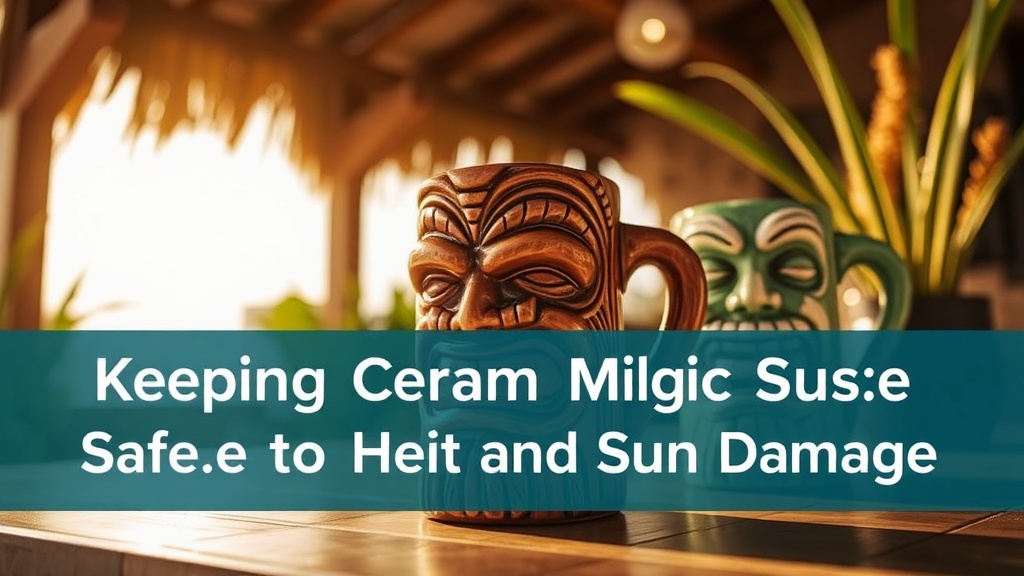
Keeping Ceramic Tiki Mugs Safe from Heat and Sun Damage

Why Temperature Control Matters for Your Collection
Many collectors believe that as long as a ceramic mug isn't being dropped, it's safe from environmental damage. This is a mistake. While ceramic is incredibly durable, the glazes and pigments used on high-end Tiki mugs—especially those with intricate hand-painted details or delicate gold leaf—are susceptible to thermal shock and UV degradation. If you display your collection in a room with high heat or direct sunlight, you aren't just risking a faded aesthetic; you're risking the structural integrity of the glaze itself. This guide covers the practical ways to protect your pieces from the invisible forces of heat and light.
It's easy to overlook the environment, but even a well-loved piece can suffer if it's sitting right next to a radiator or a window facing the afternoon sun. A cracked glaze (often called crazing) isn't always a sign of age; sometimes, it's a sign of poor storage. We'll look at how to identify these risks before they become permanent issues.
Does Sunlight Fade Ceramic Pigments?
Yes, it does. While the ceramic body is stone-like, the colored glazes and hand-painted elements are much more vulnerable. If you have a collection of highly detailed, colorful mugs—the kind with vibrant teals, deep oranges, or bright pinks—UV rays can break down the chemical bonds in the pigments. This leads to a dull, washed-out appearance over several years. It's a slow process, but once that color is gone, you can't just "paint it back on."
To prevent this, consider these placement rules:
- Avoid direct window light: Never place your display shelves directly in the path of a window's sunlight.
- Check your UV-coated glass: If you use a glass display cabinet, ensure the glass has a UV filter.
- Watch the colors: Darker, more saturated colors often show fading more drastically than neutral, earthy tones.
If you want to learn more about how light affects different materials, the Library of Congress offers excellent documentation on how light exposure impacts various physical objects. It's a good way to understand the physics behind the fade.
How Can Heat Affect My Display Shelves?
Heat is a silent killer in the world of collectibles. It's not just about the mug itself, but the way heat expands and contracts the materials. If you keep your mugs near a heat source—like a fireplace or a heating vent—the constant fluctuation in temperature causes the ceramic to expand and contract. This cycle is what leads to crazing, which is that network of tiny cracks in the glaze. Once crazing starts, it's often impossible to reverse.
Think about the environment of your room. If you have a cozy den with a roaring fire, that's a great place to enjoy a drink, but it's a terrible place to store your most prized ceramic pieces. You want a stable, consistent temperature. If the temperature swings wildly every day, your mugs are working much harder to stay intact. It's a constant battle of thermal expansion that eventually wears down the glaze's ability to grip the ceramic body.
Common Signs of Heat and Light Damage
How do you know if your collection is suffering? Look for these indicators:
- Crazing: Tiny, spiderweb-like cracks in the glaze.
- Pigment Shift: Colors looking "chalky" or losing their vibrancy compared to pieces kept in a drawer.
- Surface Flaking: If the glaze is actually lifting or peeling away from the ceramic body.
If you see these signs, it's time to move your display to a cooler, darker part of the house. It's better to be safe than sorry, especially when dealing with high-value pieces.
What is the Best Way to Store Unused Mugs?
When you aren't actively displaying your pieces, the best practice is to store them in a controlled environment. A dark, cool closet is much better than a shelf in a bright living room. If you are moving or storing pieces for a long period, consider using acid-free tissue paper rather than standard bubble wrap. Standard plastic bubble wrap can sometimes trap moisture or off-gas, which isn't ideal for long-term storage of delicate ceramics.
For those interested in the chemistry of material preservation, the American Chemical Society provides resources that explain how different environments affect various substances. Understanding the science can help you become a more informed steward of your own collection.
| Environment Factor | Potential Damage | Recommended Action |
|---|---|---|
| Direct Sunlight | Pigment Fading | Use UV-protected glass or blinds |
| High Heat | Glaze Crazing | Keep away from vents and fireplaces |
| High Humidity | Mold/Mildew on Accents | Maintain a dry, stable atmosphere |
Remember, your collection is an investment in history and art. Treating it with the same respect you'd give a museum piece ensures it stays beautiful for decades. A little bit of foresight goes a long way in preventing the most common types of damage we see in the hobby today. Keep your pieces out of the sun, away from the heat, and they'll remain as vibrant as the day you found them.