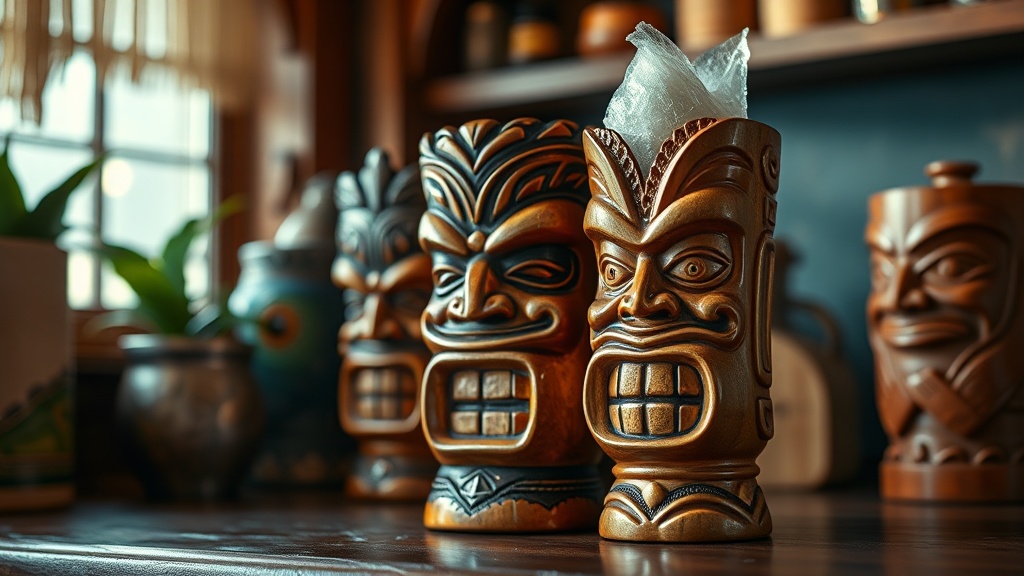
How to Clean and Care for Your Vintage Tiki Mugs Properly

What You'll Learn About Vintage Tiki Mug Care
This guide covers the safest methods for cleaning, storing, and displaying vintage tiki mugs without damaging their glaze, paint, or value. Whether you've just scored a 1960s Otagiri at a Richmond estate sale or inherited a collection of Trader Vic's originals, knowing how to care for these ceramic pieces prevents costly mistakes. Tiki mugs aren't just drinking vessels—they're collectible art. One wrong move with abrasive cleaner or a dishwasher cycle can strip decades-old finish and slash resale value by half. You'll walk away with practical steps, product recommendations, and storage solutions that protect your investment while keeping mugs display-ready.
Can You Put Vintage Tiki Mugs in the Dishwasher?
No—never put vintage tiki mugs in the dishwasher. The high heat, harsh detergents, and jostling during cycles will destroy older glazes, fade hand-painted details, and cause crazing (those tiny cracks in the glaze). Even "dishwasher safe" modern tiki mugs from Tiki Farm or Mondo eventually show wear. Vintage ceramics pre-1990 simply weren't formulated for that environment.
Here's the thing: dishwashers use water hot enough to weaken ceramic bonds over time. The thermal shock alone—rapid heating and cooling—can turn a pristine 1970s Orchids of Hawaii mug into a cracked relic. Add in aggressive spray arms and mineral deposits from hard water, and you've got a recipe for disaster.
Hand washing isn't just safer—it's the only method collectors trust. The process is simple. Fill a sink with warm (not hot) water and a few drops of mild dish soap. Dawn Ultra works well—it's gentle on glaze but cuts through tiki drink residue. Use a soft microfiber cloth or sponge. Never use Scotch-Brite pads, steel wool, or anything abrasive. Gently wipe the exterior and interior, paying attention to crevices where Mai Tai syrup hides.
Rinse thoroughly with clean water. Dry immediately with a lint-free towel. Water spots aren't just unsightly—they can etch into porous areas over decades. For mugs with metallic accents (gold rims, luster finishes), be extra gentle. Those details wear off with repeated friction.
What's the Best Way to Remove Stains from Old Tiki Mugs?
For organic stains like coffee, tea, or fruit juices, a paste of baking soda and water lifts discoloration without scratching glaze. Stubborn mineral deposits from hard water respond to white vinegar diluted 1:1 with water. Soak for 15 minutes maximum—vinegar is acidic and prolonged exposure damages certain glazes.
The catch? Not all stains should be removed aggressively. Some patina—gentle interior staining from decades of use—is part of a mug's character. Collectors at Tiki Central often debate whether to clean "tiki grunge" completely or preserve some history. For investment-grade pieces (signed mugs, limited editions, early 1960s imports), minimal intervention preserves value.
Here's a breakdown of stain types and safe removal methods:
| Stain Type | Cause | Safe Removal Method | What to Avoid |
|---|---|---|---|
| Light coffee/tea | Tannins from beverages | Baking soda paste, soft cloth | Bleach, abrasive scrubbers |
| Hard water spots | Mineral deposits | White vinegar solution (1:1), 15 min soak | Leaving vinegar on for hours |
| Dark interior patina | Years of use | Leave it—it's character | Aggressive chemicals |
| Paint transfer | Contact with other items | Mr. Clean Magic Eraser (gently) | Acetone, nail polish remover |
| Mold/mildew | Storage in damp conditions | Hydrogen peroxide (3%), thorough rinse | Chlorine bleach |
Worth noting: if a mug has crazing (fine surface cracks in glaze), stains penetrate deeper. You'll never get them completely white again—and that's okay. Crazing is common in older ceramics and doesn't affect structural integrity unless cracks go through the clay body itself.
When to Call a Professional Restorer
Don't attempt DIY repairs on cracked or chipped vintage tiki mugs. Professional ceramic restoration exists for a reason. Specialists use museum-grade materials invisible to the naked eye. Botched home repairs with Super Glue or epoxy devalue pieces instantly. The American Institute for Conservation maintains a directory of qualified conservators.
How Should You Store and Display Tiki Mugs Long-Term?
Store vintage tiki mugs in climate-controlled environments away from direct sunlight, heat sources, and humidity extremes. UV rays fade vibrant glazes—those brilliant oranges and atomic blues from 1960s California pottery turn dull and washed-out after years of sun exposure. Temperature swings cause expansion and contraction that worsen existing crazing.
Display cases with glass doors offer the best protection. IKEA's FABRIKÖR cabinet works well for mid-sized collections—it's affordable, has adjustable shelves, and keeps dust out. For serious collectors, custom cases with UV-protective acrylic (not glass—it's heavy and dangerous if it breaks) are worth the investment. Richmond's own Tiki Mugs community recommends LED lighting only—incandescent bulbs generate heat that damages ceramics over time.
Shelf arrangement matters. Don't overcrowd. Tiki mugs need breathing room. If they touch, vibration or accidental bumps cause chipping. Use museum putty (QuakeHold! is a reliable brand) to secure top-heavy designs—many vintage mugs have narrow bases and wide tops that tip easily. Apply a small dab to the base, not visible from the front.
For storage (not display), never stack tiki mugs inside each other. That pressure causes stress cracks. Wrap individual pieces in acid-free tissue paper—archival quality, not newspaper (ink transfers) or regular tissue (acidic). Store in plastic bins with tight lids to prevent dust accumulation. Add silica gel packets to control moisture. Label everything. You'll thank yourself later.
The Humidity Factor
Richmond summers get sticky. Basements and attics swing between humid and dry. That cycling wreaks havoc on ceramics. If displaying in a finished basement, run a dehumidifier. Target 40-50% relative humidity. Higher promotes mold. Lower dries out clay bodies and increases brittleness. A simple hygrometer (ThermoPro makes accurate, affordable models) tells you what you're dealing with.
How Do You Clean Tiki Mugs with Metallic or Luster Finishes?
Clean metallic-finished vintage tiki mugs with extreme care—gold, silver, and iridescent luster rubs off with normal washing. These finishes sit on top of glaze, not beneath it. Dawn Ultra and a bare hand (no cloth, even soft ones) is the gentlest approach. Let soapy water do the work. Don't rub the metallic areas.
The Westwood lusterware mugs from the 1950s and 60s are notorious for losing their rainbow sheen. Once it's gone, it's gone forever. Same with gold-rimmed imports from Japan's Otagiri Mercantile Company. That 22-karat detailing flakes with abrasion. When in doubt, clean less aggressively than you think necessary.
Some collectors of high-value metallic pieces don't wash interiors at all. They rinse with warm water immediately after use and call it done. Tiki drinks are mostly alcohol and juice—nothing that breeds bacteria if rinsed promptly. That's a personal choice, but it's common among serious collectors protecting irreplaceable pieces.
What Products Actually Work for Tiki Mug Maintenance?
Skip the fancy ceramic cleaners marketed to antique dealers. Simple, grocery-store products work better and cost less. Here's what experienced collectors keep on hand:
- Dawn Ultra Dish Liquid — Cuts through tiki drink residue without attacking glaze. The classic blue formula, not antibacterial or scented varieties that add unnecessary chemicals.
- Mr. Clean Magic Eraser (Original) — Removes scuffs and marks with melamine foam. Use gently—it's micro-abrasive. Test on an inconspicuous area first.
- Arm & Hammer Baking Soda — Mixes into paste for stain removal. Cheap, effective, non-toxic.
- Heinz Distilled White Vinegar — Dissolves mineral deposits. Always dilute. Never soak overnight.
- QuakeHold! Museum Putty — Secures wobbly mugs to shelves. Removable, reusable, doesn't damage finishes.
- Acid-Free Tissue Paper — Archival quality for storage. Buy from craft stores or online archival suppliers, not dollar stores.
- ThermoPro TP50 Hygrometer — Tracks humidity levels. Small, accurate, under $15.
Avoid: Bar Keepers Friend (too abrasive), bleach (weakens ceramic), essential oils (leave residue that attracts dust), and dishwasher pods (obviously).
How Often Should You Clean Displayed Tiki Mugs?
Dust displayed vintage tiki mugs monthly using a clean microfiber cloth or feather duster. Don't use Pledge or furniture sprays—silicone buildup attracts more dust and can create a film that's hard to remove from porous areas. For mugs in closed cabinets, quarterly dusting suffices.
Here's the thing about dust: it's abrasive. Let it accumulate and you're essentially sanding your mugs every time you handle them. Regular light cleaning prevents the need for aggressive scrubbing later. Think maintenance, not restoration.
Rotate your display occasionally. Mugs in the back of cabinets don't get handled—good for preservation—but they also don't get inspected. Catching a new crack, chip, or mold spot early prevents bigger problems. Plus, rotating lets you enjoy pieces you forgot you owned. That's half the fun of collecting.
Travel and Transport Tips
Moving a collection? Bubble wrap is your enemy long-term—it can stick to glaze and leave residue. Use acid-free tissue first, then bubble wrap for cushioning. Pack mugs individually in boxes with no more than two per container. Fill voids with packing peanuts or crumpled paper. Mark boxes "FRAGILE" and "THIS SIDE UP" on multiple sides. Insurance is non-negotiable for high-value pieces—USPS, FedEx, and UPS all offer declared value coverage. Photograph everything before shipping.
Collecting vintage tiki mugs connects you to mid-century Polynesian pop culture, skilled ceramic artisans, and a passionate community of enthusiasts. With proper care, these pieces last generations—ready for the next wave of collectors who appreciate their quirky, tropical charm.
Steps
- 1
Assess your tiki mug's material and condition
- 2
Hand wash using mild soap and lukewarm water
- 3
Dry thoroughly and store in a climate-controlled environment