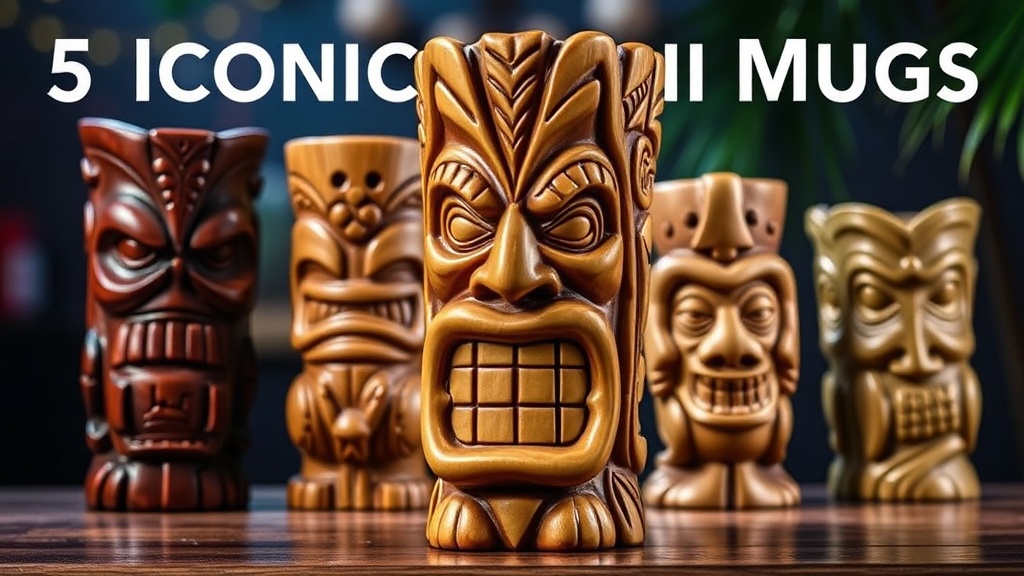
5 Iconic Tiki Mugs Every Collector Needs in Their Collection

The Classic Ku Tiki Mug
The Mysterious Moai Mug from Easter Island
The Fiery Devil Tiki Mug
The Vintage Orchids of Hawaii Barrel Mug
The Modern Geometric Tiki Mug
Tiki culture has experienced a remarkable resurgence over the past decade, and at the heart of this revival sits the collectible tiki mug. These ceramic vessels—once simple drinkware for tropical cocktails—have evolved into legitimate art pieces, with rare specimens fetching hundreds (sometimes thousands) of dollars at auction. Whether you're just starting a collection or looking to anchor an existing one with cornerstone pieces, this guide covers five iconic tiki mugs that represent the pinnacle of the craft. Each selection balances historical significance, artistic merit, and genuine collectibility.
What Makes a Tiki Mug Truly Iconic?
A tiki mug earns "iconic" status through some combination of historical importance, artistic innovation, and cultural impact. The best pieces tell a story—about the artist who sculpted them, the bar that commissioned them, or the moment in tiki history they represent.
Rarity certainly helps, though it's not everything. Some mugs produced in large quantities (like certain Munktiki or Tiki Farm releases) remain iconic because of their influence on the aesthetic direction of the entire scene. Others—limited runs from legendary establishments like Trader Vic's or the Mai-Kai—derive their status from scarcity and provenance.
The mugs selected here span different eras, styles, and price points. Collectors won't find every piece at garage sale prices. That said, understanding what makes these five specimens significant provides a foundation for evaluating any potential addition to a collection.
Which Tiki Mugs Hold Their Value Best?
vintage mugs from defunct tiki bars and limited artist editions tend to appreciate most consistently, though the market has cooled somewhat from its 2015-2019 peak.
The tiki mug resale market operates through several channels: eBay remains the largest marketplace, though specialized forums like Tiki Central and Facebook collector groups often yield better deals (and more knowledgeable sellers). Annual events like Tiki Oasis and the The Hukilau feature mug releases that frequently double or triple in value within hours.
Condition matters enormously. Original mugs with factory glaze imperfections often command premiums—collectors call this "factory seconds charm." Repairs, chips, or fading hurt value significantly. Smart collectors document provenance: where a mug was acquired, which event it commemorates, and whether it came with original packaging.
| Mug Category | Average Price Range | Value Retention | Best For |
|---|---|---|---|
| Vintage 1950s-60s barware | $75 - $400 | Excellent (if authentic) | Serious collectors, investors |
| Limited artist editions (100-500 pieces) | $40 - $150 | Very good | Mid-level collectors |
| Modern mass-market releases | $15 - $40 | Poor to moderate | Beginners, casual enthusiasts |
| Event-exclusive mugs | $60 - $300 (secondary market) | Variable (event-dependent) | Event attendees, speculators |
1. The Original Trader Vic's Mai Tai Bowl
No collection holds legitimacy without acknowledging Trader Vic's—the Oakland institution that (debates aside about Don the Beachcomber) popularized tiki culture in America. The original Mai Tai bowl, introduced in the 1950s, represents ground zero for tiki drinkware.
Victor Bergeron designed these bowls to serve his signature Mai Tai cocktail to multiple guests—typically two to four drinkers sharing from a communal vessel. The bowls feature the distinctive "TV" logo and Polynesian-inspired geometric patterns that became synonymous with mid-century tiki aesthetics.
Authentic vintage specimens bear specific markings: "Trader Vic's" impressed or printed on the base, often with a California location stamp. Reproductions exist (Trader Vic's still sells modern versions), but the glaze quality, weight, and foot-ring construction differ noticeably from 1950s-60s originals. The vintage pieces feel substantial—thick ceramic walls, glossy lead-based glazes in deep ocean blues and volcanic browns.
Finding an authentic vintage Mai Tai bowl requires patience. Estate sales in California yield the best results, though eBay turns up legitimate pieces monthly. Expect to pay $150-300 for excellent condition examples. Reproductions run $40-60—fine for display, but they won't appreciate like the real thing.
2. The Kevin Kidney Haunted Mansion Tiki Mug
Disneyana and tiki culture share surprising DNA—both traffic in immersive fantasy environments, elaborate backstories, and collectible merchandise. Kevin Kidney bridges these worlds better than any living artist, and his Haunted Mansion tiki mug series (released through Disney Parks and various tiki events) represents the gold standard for crossover collectibles.
The original 2016 "Ghost Host" mug—shaped like the Mansion's iconic caretaker with a detachable head revealing a candle inside—remains the most sought-after piece. Kidney designed it for the fiftieth anniversary Disneyland after-hours event, producing only 1,000 numbered pieces. The sculpting captures the Mansion's gothic elegance while maintaining genuine tiki proportions—the wide mouth, the stacked geometric base, the glazed finish that catches bar lighting perfectly.
Secondary market prices for the Ghost Host have reached $400-600. Later releases in the series—including the Madame Leota and Hatbox Ghost variants—trade lower ($150-250) but remain highly collectible. Kidney's work matters because he elevated tiki mug design from novelty item to legitimate sculpture. His pieces display equally well in china cabinets as behind home bars.
Why Artist-Designed Mugs Matter
Kidney's background in Disney Imagineering shows in his tiki work—every piece tells a story, includes hidden details, and rewards close inspection. This narrative quality separates art mugs from commodity drinkware. When evaluating any artist-designed piece, look for: original sculpting (not repurposed factory molds), limited production numbers, and the artist's signature or chop mark somewhere on the piece.
3. The Tiki Farm Pele Mug
Tiki Farm—the San Clemente-based manufacturer—has produced more tiki mugs over the past two decades than any other single entity. Their catalog runs thousands of designs, commissioned by bars, events, and retail outlets worldwide. Within this massive output, certain pieces stand apart.
The Pele mug, designed by Tom Thordarson and released in 2004, captures the Hawaiian fire goddess in classic mid-century style. Standing roughly seven inches tall, the mug depicts Pele with flowing hair transforming into volcanic flames, her arms raised in invocation. The original glaze—deep reds and oranges with black lava accents—perfectly suits the subject matter.
Here's the thing about Tiki Farm: they reissue popular designs. The Pele mug has seen multiple production runs with slightly different glaze formulas. First editions (marked "Tiki Farm 2004" on the base) command $80-120. Later runs trade around $30-50. The differences are subtle—early versions have richer color saturation and a slightly heavier ceramic body—but matter to serious collectors.
The Pele mug exemplifies why Thordarson remains influential in tiki art. His background in animation (Disney, Warner Bros.) informs every design—strong silhouettes, readable at a distance, yet detailed enough to reward close examination. For collectors building thematic displays, Pele anchors any "Hawaiian mythology" section beautifully.
4. The Frankie's Tiki Room Witch Doctor
Las Vegas hosts the only 24-hour tiki bar in America—Frankie's Tiki Room, tucked into a strip mall on Charleston Boulevard. Since opening in 2008, Frankie's has commissioned over 100 unique mug designs, making them the most prolific modern producer of bar-exclusive tikiware.
The Witch Doctor mug—designed by Bosko and released in 2009—ranks as their signature piece. It depicts a shamanic figure with exaggerated features: bulging eyes, a bone through the nose, and a headdress that functions as the drinking vessel's rim. At nine inches tall, it's substantial—most collectors use it for display rather than actual drinking.
What makes the Witch Doctor special isn't scarcity (Frankie's produced several thousand over multiple glaze variations) but cultural impact. This mug appeared in tiki documentaries, Instagram feeds, and collector "grail" lists throughout the 2010s. It helped establish the aesthetic for modern tiki bars worldwide—darker, more mysterious, less "kitschy beach party" and more "ritualistic temple."
Acquiring one requires either visiting Frankie's in person (where they typically stock current glaze variations for $65-85) or paying secondary market prices ($120-200 for retired colorways). Worth noting: Frankie's releases new colorways regularly, so "completing" a Witch Doctor collection is essentially impossible—a feature, not a bug, for dedicated collectors.
5. The Ooga-Mooga Suffering Bastard
Online tiki communities revolutionized collecting, and Ooga-Mooga (the now-defunct social network and database) played a pivotal role. The site's 2008 "Suffering Bastard" mug—commissioned from Tiki Farm and designed by Mooney—commemorates both the classic tiki cocktail and the digital community that helped preserve tiki culture during its lean years.
The design references the original Trader Vic's Suffering Bastard presentation—a ceramic figure clutching its head in anguish, suggesting the morning after consequences of tiki overindulgence. Mooney's interpretation adds distinctive crossed eyes and a removable head that serves as a shot glass—functional and humorous.
Only 250 pieces were produced, making this genuinely scarce. Most owners discovered Ooga-Mooga during its 2006-2014 heyday and have held onto their mugs. When examples surface—usually through estate sales or the occasional eBay listing—prices range $200-350 depending on condition and whether the original shot glass "brain" is included.
The Suffering Bastard represents something important: tiki culture's transition from physical bars to online communities. Collectors who display this piece aren't just showing ceramic art—they're acknowledging the internet's role in keeping tiki alive when brick-and-mortar establishments were closing nationwide.
What Should Beginners Look for in Their First Tiki Mug?
Start with pieces that speak to personal taste rather than investment potential. The tiki community values authenticity of appreciation—collectors who genuinely love their mugs, regardless of monetary value, earn more respect than speculators hoarding rare pieces in storage.
Budget $30-50 for initial purchases. Tiki Farm's ongoing releases, modern Trader Vic's reproductions, and mugs from active tiki bars (Three Dots and a Dash in Chicago, Smuggler's Cove in San Francisco, Latitude 29 in New Orleans) offer excellent quality at accessible prices. Learn what glazes, shapes, and styles appeal before chasing grail pieces.
Condition standards should be high from the start. A collection built on damaged or repaired pieces becomes difficult to upgrade later. Hold out for excellent condition examples—even if it means acquiring slowly.
The five mugs detailed here represent collecting milestones: historical significance (Trader Vic's), artistic achievement (Kidney's Disney work), manufacturing excellence (Tiki Farm), cultural impact (Frankie's Witch Doctor), and community heritage (Ooga-Mooga). Understanding why each matters provides context for evaluating the thousands of other tiki mugs circulating through the collector marketplace. Happy hunting—may your shelves groan under the weight of volcanic ceramic treasures.