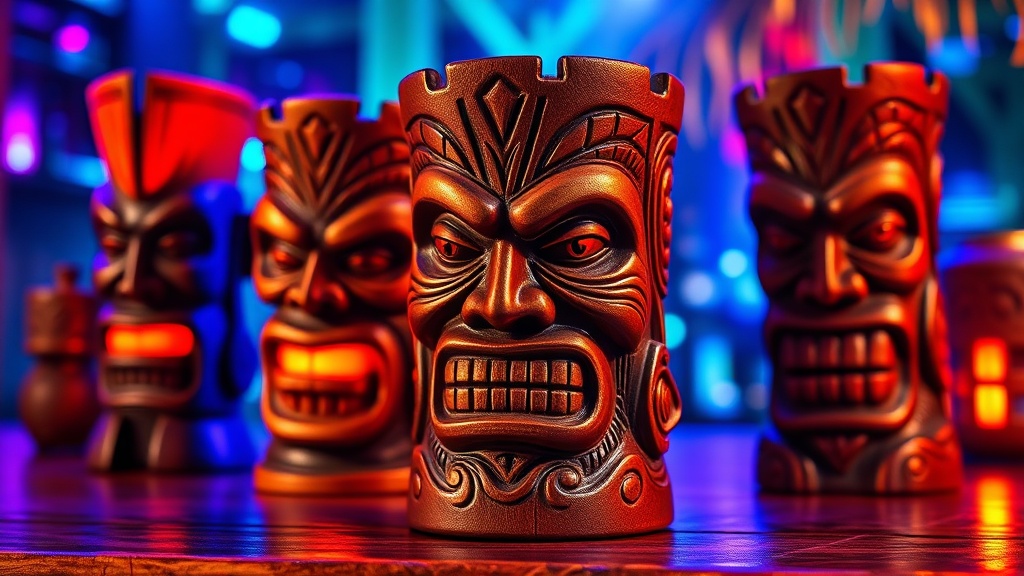
10 Must-Have Tiki Mugs Every Serious Collector Needs

The Original 1963 Mai-Kai Mystery Bowl
Trader Vic's Limited Edition Scorpion Bowl
Bosko's Hand-Carved Ku Tiki Mug
Tiki Farm 20th Anniversary Commemorative
Kevin Kidney's Enchanted Tiki Room Series
Tiki mug collecting sits at the intersection of Polynesian pop culture, mid-century design, and functional art. This guide breaks down ten specific mugs that represent the foundation of any serious collection—pieces that hold their value, tell a story, and anchor a display shelf with genuine authenticity. Whether starting fresh or refining an existing collection, these are the mugs worth hunting down.
What Makes a Tiki Mug Valuable to Collectors?
Scarcity, craftsmanship, and provenance drive the market. Vintage mugs from the 1950s and 60s—produced by restaurants like The Tiki-Ti in Los Angeles or the now-shuttered Kahiki in Columbus, Ohio—command premium prices because they're finite. When a restaurant closes, its custom ceramics become instant collectibles.
Modern limited runs from artists like Munktiki or Tiki Rob follow the same principle. An edition of 50 mugs disappears fast. The secondary market (eBay, Facebook collector groups, Tiki Central forums) determines true value—often doubling or tripling retail within months.
Condition matters enormously. Crazing (fine surface cracks in glaze) is acceptable on vintage pieces. Chips, repairs, or missing paint? Those deductions hurt. Original stickers, tags, or packaging add provenance that collectors pay extra for.
Which Vintage Tiki Mugs Should You Prioritize?
The holy grails of vintage collecting come from the first wave of Polynesian restaurants. These five represent different price tiers and acquisition difficulties:
| Mug | Origin | Era | Approximate Value | Rarity |
|---|---|---|---|---|
| Orchids of Hawaii R-1 | Orchids of Hawaii (wholesale) | 1960s | $80-$150 | Common |
| The Kahiki Mystery Girl | Kahiki Supper Club, Columbus OH | 1960s-2000 | $300-$600 | Scarce |
| Trader Vic's Fog Cutter | Trader Vic's restaurants | 1960s-70s | $150-$400 | Moderate |
| Tiki Bob's San Francisco | Tiki Bob's (defunct) | 1950s-60s | $400-$800 | Rare |
| The Mai-Kai Barrel | The Mai-Kai, Fort Lauderdale | 1960s-present | $100-$250 | Moderate |
The Orchids of Hawaii R-1—often called the "ISU mug" for its interlocking SC (for "Sculpture Craft") stamp—is the gateway drug. They're everywhere. Antique malls, estate sales, eBay lots. The design (a grimacing Moai-style face with puffed cheeks) appears in brown, green, and white glazes. Grab one in good condition for under $100 and you've got an authentic 1960s piece without the premium.
The Kahiki Mystery Girl stands apart. When the restaurant closed in 2000, these became instant unicorns. The design—an elongated female figure with closed eyes and elaborate headdress—shows up occasionally on eBay, but expect bidding wars. Worth noting: reproductions exist. Check for the "Kahiki" stamp on the base, feel the weight (vintage is heavier), and examine the glaze consistency.
What Modern Tiki Mugs Belong in Every Collection?
Contemporary artists have elevated tiki mug design to fine art. These five modern pieces offer accessibility, stunning craftsmanship, and the satisfaction of supporting working artists:
Munktiki's "Bamboo Ben" Series — Paul Nielsen (the artist behind Munktiki) has been producing limited runs since the late 90s. The Bamboo Ben design—a grinning, segmented bamboo character—comes in endless colorways. The standard editions retail around $65-$85. Convention exclusives (usually 50-100 pieces) sell out in minutes. These display beautifully in groups, and the sculpting detail holds up to close inspection.
Tiki Farm's "Suffering Bastard" — Tiki Farm, based in San Clemente, California, produces the widest range of contemporary tiki mugs. Their Suffering Bastard—a bulbous, miserable face with bloodshot eyes—references the classic cocktail while standing alone as sculpture. At around $40-$50 retail, it's accessible. The catch? Some designs are produced in massive quantities. Check edition sizes before buying if investment potential matters.
Tiki Rob's "Kapu" Mugs — Rob Hawes (Tiki Rob) creates some of the most intricate ceramic work in the scene. His Kapu series features detailed headdresses, textured surfaces, and glaze work that rivals vintage Japanese ceramics. These run $75-$120 retail, with limited editions hitting $200+. The craftsmanship justifies every penny—you'll spend ten minutes discovering new details.
Horror in Clay's "Cthulhu Tiki" — Crossover appeal drives this one. Horror fans and tiki collectors overlap significantly. This octopus-faced design (inspired by H.P. Lovecraft's cosmic entity) comes in multiple sizes. The standard 14-ounce version runs about $45. The 24-ounce "Big Cthulhu"—a statement piece that dominates any shelf—retails around $85. Both are produced in rotating colorways, so earlier editions command premiums.
VanTiki's "Lava Letch" Series — Doug Horne (VanTiki) brings a distinct California lowbrow art sensibility to his mugs. The Lava Letch—a devilish figure lounging in a volcano—showcases his painting background through elaborate multi-color glazes. These are smaller edition runs (usually 75-150 pieces) and sell out quickly. Secondary market prices often double retail within weeks.
How Do You Display and Care for Tiki Mugs?
Storage matters as much as acquisition. These are ceramics—fragile, often top-heavy, and susceptible to damage.
Shelving should account for center of gravity. Many tiki mugs (especially modern sculptural pieces) are wider at the top. Deep shelves prevent tipping. LED strip lighting from below creates dramatic shadows through the eye and mouth cutouts—half the appeal of these pieces happens after dark.
Cleaning requires restraint. Never dishwasher vintage mugs—the thermal shock and harsh detergents destroy old glazes. Hand wash with mild soap, dry immediately. Modern mugs vary by manufacturer—check instructions. Tiki Farm marks most pieces dishwasher safe. Munktiki and VanTiki generally recommend hand washing to preserve custom glazes.
Documentation protects value. Photograph each mug with its purchase receipt, artist COA (certificate of authenticity), or original tags. Maintain a simple spreadsheet: acquisition date, price paid, artist, edition size, edition number. When insurance becomes necessary (collections exceeding $5,000), this documentation streamlines claims.
Building Your Hunt List
Start with the R-1. It's affordable, authentic, and teaches what 1960s ceramic quality feels like. Move to a modern piece next—the Munktiki Bamboo Ben or Tiki Farm Suffering Bastard. Compare the weight, glaze depth, and sculpting between vintage and contemporary. That education informs every future purchase.
Next, choose a specialty. Some collectors focus exclusively on vintage restaurant ware. Others chase specific artists. A few concentrate on crossover pieces (horror-tiki, Disney-tiki, music-tiki). Specialization builds expertise—and expertise prevents expensive mistakes.
Set price ceilings before browsing. The adrenaline of auctions and convention exclusives destroys budgets. Decide that $200 is the absolute maximum for any single mug, then stick to it. The hunt continues—there's always another mug.
The Secondary Market Reality
eBay remains the largest marketplace, but prices often inflate 30-50% above collector group rates. Facebook hosts active communities ("Tiki Marketplace," "Tiki Central Collectors") with stricter moderation and fairer pricing. The Tiki Central forums maintain a classified section where longtime collectors sell directly—often the best source for vintage pieces with documented history.
Convention exclusives require strategy. The Hukilau (Fort Lauderdale), Tiki Oasis (San Diego), and Tiki Kon (Portland) release limited mugs to attendees. Arriving early, knowing the release schedule, and befriending vendors improves odds. Many collectors work in pairs—one queues for exclusives while another hits artist booths.
"The best collections aren't built overnight. They're curated through patience, research, and recognizing that the next mug will always be there." — Common wisdom among veteran collectors
Authentication challenges increase with value. High-end vintage pieces (Tiki Bob's, early Trader Vic's) attract forgers. Learn the telltale signs: weight (vintage is usually heavier), base markings (stamps wear but don't disappear), glaze consistency (modern reproductions often look too perfect). When uncertain, post photos to Tiki Central—some members have handled thousands of pieces and spot fakes instantly.
Final Pieces Worth Mentioning
Beyond the ten core mugs, three categories deserve attention:
- Restaurant modern releases: The Mai-Kai still produces mugs for special events. Three Dots and a Dash (Chicago), Latitude 29 (New Orleans), and Strongwater (Anaheim) commission custom ceramics that rival vintage quality.
- Artist collaboration pieces: When two artists combine (Tiki Rob sculpting, Munktiki glazing, for example), the results often become grails. These rarely exceed 50 pieces.
- Regional exclusives: Certain mugs only release in Hawaii, Japan, or at specific international tiki events. Networking with collectors in those regions opens acquisition channels unavailable domestically.
The tiki mug market shows no signs of cooling. New collectors enter daily. Artists continue pushing ceramic boundaries. And the original mid-century pieces—finite and fragile—only become scarcer. The ten mugs outlined here provide a foundation that holds value, sparks conversation, and honors the weird, wonderful history of Polynesian pop.
Happy hunting. May your shelves run out of space before your wishlist does.